What To Expect
Joining the band is an exciting step for students—and a partnership with families and schools.
At Music in Catholic Schools, we want every child to thrive by learning an instrument, participating in rehearsals and concerts, and experiencing the joy of making music together. This page explains how band classes work, what we expect from students, and the resources available to help your family support their musical journey.
How Band Class Works
-
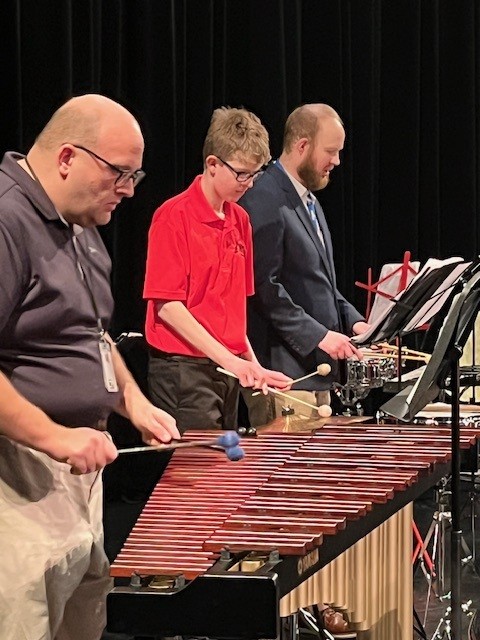
One small group lesson per week on any band instrument: (woodwinds, brass, percussion).
-
Strings, guitar, and piano are not included in MCS band classes.
-
Classes usually happen during the school day, sometimes before or after.
-
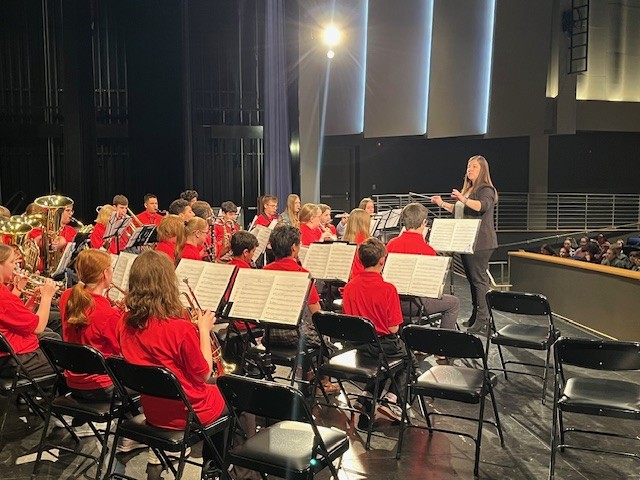
One weekly band/ensemble rehearsal if enough students are enrolled.
-
Two required concerts each year (December & May).
-
Opportunities for special events: Band Olympics, Band Clinic, Solo/Ensemble Festival, Honor Band, Jazz Band, opportunities to play with some of our High School pep bands.
-
Band music and lesson books provided; limited instruments available for a nominal fee through MCS for families in need.
Expectations
What We Ask of Students:
-
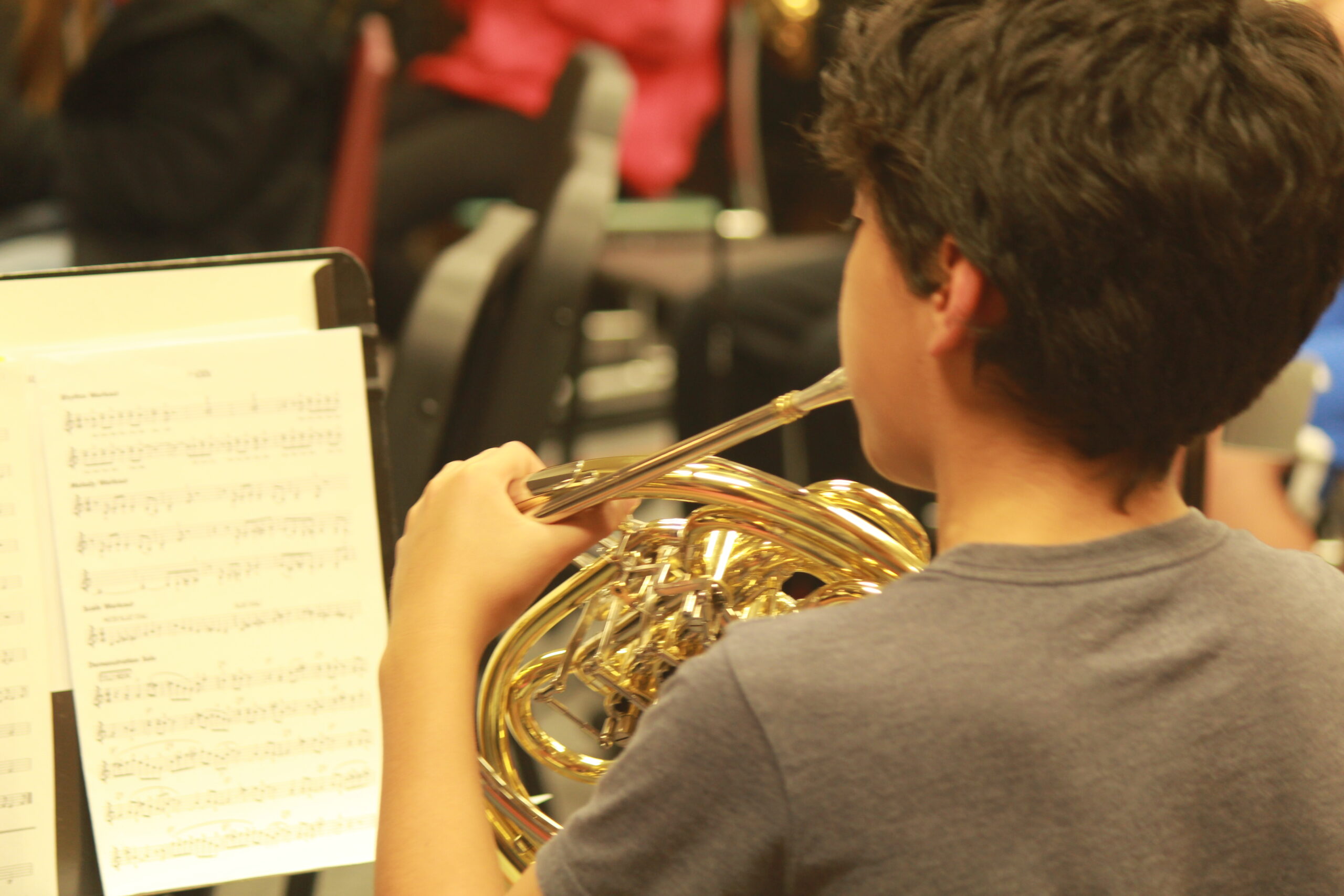
Practice regularly at home (20 minutes daily recommended).
-
Arrive on time with instrument, stand, and music.
-
Take instruments home each day.
-
Make up schoolwork missed for band.
-
Complete lesson assignment sheets and practice charts with parent signature.
-
Share memos and fliers with parents promptly.
-
Attend concerts and activities for a full band experience.
Expectations
Commitment
Joining band requires dedication and commitment. All students need to give a musical instrument a fair chance—at least one school semester, but a full school year is a fairer try. Band is rewarding, but takes effort from the player to make it fun.
Practice
Individual practice at home on a regular, daily basis is essential for progress. Twenty minutes of focused practice a day is sufficient for most beginners. Students who are more advanced should practice thirty minutes each day. Parental guidance and encouragement are needed to commit to a practice routine. Students often become
frustrated and surprised that learning to play an instrument requires so much work. Adequate practice enables students to do their best and develops self-discipline. Students should record the time practiced on the lesson assignment sheet or in the book (depending on teacher’s preference) and also have this signed by a parent.
Band Schedule
Music in Catholic Schools provides elective band classes during the school day. Most students miss some class time each week to attend band classes. Normally, band classes are held at two different times each week so that students do not miss the same class. Often, band class times are rotated within a block of time at the school. It is the band student’s responsibility to get missed assignments and get any make-up work done for other classes. Band classes are missed occasionally for holidays or special events and are not usually made up. Records are kept so that the total number of band classes at each school is equal to that of other participating schools, which normally averages to 62 classes per school year (for twice a week schools.)
Communication
Assignment sheets or charts in the lesson materials should be filled out by students and signed by their parents. Teachers may add comments regarding the student’s progress. Communications regarding progress and concerns take place regularly, mostly via email. Please check students’ band folders and backpacks for band flyers. Each teacher has two joint-schools concerts – one in December and one in May. There are special rehearsals prior to these performances. Teachers may be reached via e-mail or call the MCS office and request a return call. The MCS administrator is in the office Mondays through Thursdays from 9:00 am until 4:00 pm. Call 402-827-3724 for an appointment. Emails with most information about the MCS program will come through Flocknote.
Band Materials
Parents need to supply the instrument, stand, and supplies (reeds, oil, cork grease, etc.) Some MCS instruments are available to loan to students, and those with financial need receive priority. Lesson books and sheet music are provided. The student may keep lesson books, but sheet music needs to be returned each year.
Instrument Care
Students are taught proper care of their instruments during the first few band classes. Instrument care sheets are distributed to beginning students. Accessories, including music stands, are needed to play instruments, as well as to keep them in proper playing condition. Reed instrumentalists should have no fewer than two good reeds at all times. Brass players need valve or slide oil or slide cream and a water bottle. A small, lint-free cloth can be kept in most cases to use for wiping off the instrument when putting it away. Parents should remind students to use their care supplies and to obtain any when necessary.
Registration / Payment
Parents must register through the online form on the MCS web site. It is best to have students registered by September 13th, but late registrations can be arranged. For those wishing to make monthly payments, automatic electronic payments (not credit cards) take place around the 15th of each month starting in mid-September and going through mid-May. Those wishing to drop their child from the program must notify the band teacher and the MCS office in writing, but the commitment is for a minimum of one semester.
Tuition Assistance
Assistance will be given to those who qualify for free or reduced lunch. Additional assistance may be available for students who cannot pay the entire tuition cost. Instruments are also available to loan for a nominal fee to those with financial need. Learn more on the Tuition page.
Fundraising
Students will be asked to participate in fund-raising activities, as needed.
Curriculum
Take a look at our Curriculum Guide to learn more about the specific outcomes and milestones students should achieve by band level.
Beginning Band
| Emphasis | Outcome |
|
Care of Instrument 1. Cleanliness |
1. Development of proper care 2. Proper mechanical operation of instrument |
|
Holding Instrument 1. Finger and hand position |
Continuous growth and development of muscle facility. |
|
Tone Production 1. Proper embouchure. |
Development of characteristic sound |
|
Music Reading / Listening 1. Letter names of staff |
1. Cultivate sensitivity to pitch, melodic line, dynamics, tone quality, phrasing, and rhythm 2. Development of eye coordination 3. Listening, analyzing, and describing music 4. Evaluate music and music performance. |
|
Group Attitudes Awareness of each individual’s responsiblity to the group: |
Progress through teamwork. |
Intermediate / Advanced Band
Same as beginning band with these additions:
| Emphasis | Outcome |
|
Care of Instrument |
Awareness of sound due to reeds, mouthpiece, and quality of instrument |
|
Music Reading |
1. Greater emphasis on dynamics, phrasing, and key signatures. 2. Development to the point where simple standard literature can be played |
Expected Outcomes Related to Ten Aspects of Instrumental Music Training
(Based on National Standards)
(Four-Year Plan)
1. Breath Control
1st Year: Understanding of correct breathing procedure. Introduced to phrasing. Able to play forte, mezzo forte, and piano.
2nd Year: Able to start a tone at fortissimo and decrescendo to pianissimo; and able to start a tone at fortissimo, decrescendo to pianissimo and crescendo to fortissimo.
3rd Year: Increase mastery of dynamics and phrasing.
4th Year: Able to start a tone at fortissimo, decrescendo to pianissimo and crescendo to fortissimo throughout the range of the instrument.
2. Chromatic Scale
1st Year: Recognize sharps, flats, and naturals. Introduce enharmonics.
2nd Year: Recognize and play chromatic scale one octave.
3rd Year: Recognize and play chromatic scale two octaves at quarter note = 120 mm.
4th Year: Recognize and play chromatic scales starting at varying levels in eighth notes at 80 mm throughout the range of the instrument.
3. Scales
1st Year: Play from memory one octave scale in key of Bb concert, with arpeggio.
2nd Year: Play from memory one-octave scales in concert keys of Bb & Eb, with
arpeggios. Able to play F and Ab concert scales.
3rd. Year: Play from memory scales above, plus C and Db, with arpeggios. Able to
play relative minors for those major scales learned.
4th Year: Able to play major and minor scales from memory above, with arpeggios.
4. Articulation
1st Year: Understanding correct attacks and release. Able to play natural attack and slur.
2nd Year: Understanding correct attacks and releases. Able to play accent, staccato, legato, and simple duple articulation patterns.
3rd Year: Able to play natural attack, slur, staccato, legato, accent, forte-piano, duple articulation patterns, and slur additional variety of combined articulations in varying rhythms and tempi.
4th Year: Continue the above.
5. Rhythm
1st Year: Recognize and play note values in “quarter” time. Be able to recognize, describe, and play whole, half, quarter, eighth, and dotted quarter notes (including writing in the counting.)
2nd Year: Recognize and play varied rhythm patterns in “quarter” and alla breve time, including sixteenth notes in quarter time, and be able to recognize, describe, and play rhythm patterns (including writing in the counting.)
3rd Year: Able to recognize, describe, and play rhythm patterns, (including writing in the counting) in “eight” time. Continue the above. Be able to recognize dictated rhythms in proper notation, indicating understanding of rhythms.
4th Year: Be able to play, write, and count all different rhythms.
6. Posture and Embouchure
1st Year: Demonstrate formation of a good embouchure and good sitting and standing position.
2nd Year: Correct posture and correct embouchure as applied to range of instrument.
3rd Year: Continue the above.
4th Year: Continue the above.
7. Theory/Ear Training
1st Year: Be able to recognize whole and half steps. Be able to distinguish major from minor scales and hear right and wrong intervals in major scales. Be able to recognize various key signatures. Recognize key of instrument and know definition of concert key.
2nd Year: Be able to recognize seconds, thirds, fifths, and octaves. Be able to recognize key signatures and names of these keys: Bb, Eb, F, and Ab.
3rd Year: Continue the above. Introduced to transposition on individual instrument, recognizing difference between various instruments and concert key.
4th Year: Be able to transpose concert notes to written notes of each individual’s instrument.
8. Relationships to other arts and disciplines:
Understanding relationships between music, other arts, and disciplines outside the arts. Understanding music in relation to history and culture.
All Four Years: Band method books, full band music, small group pieces, and solos are used. Music materials will be diverse and will reflect all acceptable styles, types,
cultures, and historical times. Related background information, explanations, analogies, and general awareness of culture, historical significance, and correspondence to all disciplines will be included.
9. Create Music: Improvising melodies, variations, and accompaniments.
Composing and arranging music with specific guidelines.
1st Year: Students will play simple songs “by ear” and will have composing opportunities.
2nd-4th Years: Increased and longer examples.
10. Singing
All Four Years: Students will sing to enhance correct listening and playing skills.